Folkwang

folkwang is...swarm-intelligent

Analog sources are going digital: in his e-learning seminar "Quellenkunde", Wolfgang Kostujak, who teaches historical performance practice at Folkwang, is creating an online glossary together with his students. The aim is to list all 17th and 18th century sources that are essential for the study of historical performance practice. In this interview, Wolfgang Kostujak explains how the concept works and what insights he is gaining from the project work for the coronavirus situation.

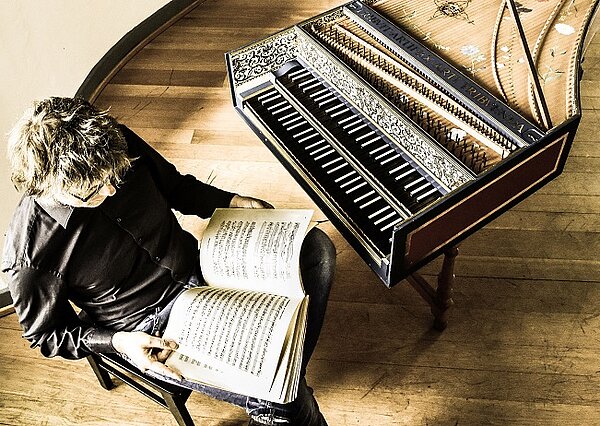
Wolfgang Kostujak, Photo: Frank Gronau

How did you come up with the idea of developing a glossary for historical performance practice?

Four and a half years ago, I took over the "Source Studies" seminar at Folkwang. It's a subject that might seem a bit outdated at first, but it's hugely important for all students studying early music. That's why I came up with the idea of modernizing it with digital possibilities. My aim was to establish a cross-source platform on the Folkwang servers that offers a bibliographical overview of all relevant sources of historical performance practice in the 17th and 18th centuries. After all, not every student can read every source. It makes much more sense to network and share your knowledge with others. Swarm intelligence is the keyword here.

How do you work with your students on the glossary?

The preparatory work is done analog in the lecture hall: the sources are compiled in the form of presentations and discussed in the seminar. The work then continues digitally: the students describe and index the content of the sources, their authors and aspects such as form, reception history and distribution in the online glossary. Through this intensive examination of the sources, students not only pass on their knowledge, but also train their own reading skills.

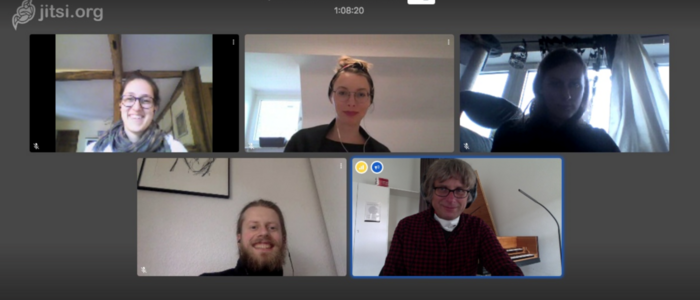
Insight into the online seminar "Source Studies" (from left to right): Lena Frömmel, Johanna Huber, Fabienne Kirschke, Melchior Kupke and Wolfgang Kostujak. Screenshot: Wolfgang Kostujak

How is the glossary structured?

The software and its interface are quite simple, which has the technical advantage of not tying up too much capacity. The glossary itself is organized alphabetically. In addition to the keyword catalog, there is also a full-text search function as well as images and references to online resources. For the majority of articles, the glossary also contains complete digital copies of the sources, some of which were scanned exclusively for the project. The keywords in particular need to be carefully considered: Which keywords are relevant at all? How detailed should they be? Which synonyms do we work with?

How many contributions have been recorded so far?

As of today, we have around 150 keywords - from acciacatura to plucked instruments. In the last three years, we have bibliographically recorded and indexed a total of 30 sources. In total, there are around 120 sources that are indispensable for the study of historical performance practice. Once we have indexed them all, we will be in a great position. It's nice to think that the glossary will be expanded and maintained by many Folkwang generations over the years.

What feedback has there been so far?

I'm delighted that my students have been so enthusiastic about the project. In the meantime, fellow students from other degree programs, for example from historical musicology, but also from the subjects of modern music, are also supporting us. We also benefit from the knowledge of our international students, who process and index sources for us in their native languages.

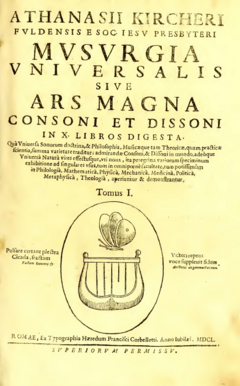
Currently being prepared by Wolfgang Kostujak for the online glossary: The "Musurguia universalis" by Athanasius Kircher, Rome, 1650

Should the glossary also be open to non-students?

I definitely have the idea in the back of my mind. But before we get there, we'll certainly have to optimize the software a bit. At the moment, I would describe the glossary as a locomotive that is already running quite well, but still steams and squeaks a bit here and there

In times of Corona, digital teaching methods are essential. What experiences from your work on the online glossary are helping you in the current situation?

I have the impression that the corona situation gives us the opportunity to develop more enjoyment of the digital playgrounds. Some of them have been somewhat neglected so far. Of course, the amount of work that the glossary entails sometimes makes me feel very small. But you can't let that get in the way

What advice do you have for students in the current situation?

Staying at home doesn't mean that you shouldn't do anything at all. Instead of practising my instrument, I can, for example, work intensively on a book in isolation and expand my knowledge. At the moment, for example, I'm preparing the 'Musurgia universalis' by Athanasius Kircher from 1650 for the glossary, a real 'mammoth source' that I certainly wouldn't have had the time to read without corona. Even if the measures to combat the coronavirus seem restrictive at first glance, they also offer opportunities for learning.

Kristina Schulze, University Communication